Raw Unmasked Haiku/Haiga: Poetry of Truth and UNESCO Recognition
Welcome to another entry of unmasked haiku—where the traditional structure strips away its polite ornamentation to reveal raw moments, sharp truths, and unfiltered imagery. Here, poetry doesn’t cushion reality; it looks right through it.
Dive into the unmasked haiku from my upcoming book.
Unmasked Haiku/ Haiga by Gabriela Marie Milton
81. THE LOST HANDKERCHIEF
an old lady— looking for her handkerchief, children laugh
82. POINT OF NO RETURN
belladonna— the burning of the boats starts
📖 A Quick Reminder
Just a reminder that my book, Raw: Unmasked Haiku, is coming out at the beginning of December! Stay tuned for more details.
📢 Announcement: Call for Submissions
Additionally, the official call for submissions for Haiku: A Global Manifesto for UNESCO Recognition—endorsed by Chairman Kenzo Nomura of the Haiku UNESCO Intangible Cultural Heritage Registration Promotion Council—is coming soon! Start gathering your best work—more information on guidelines and deadlines will be announced shortly.
Gabriela Marie Milton 4X #1 Amazonbestseller Author an Founder Of Literary Revelations
The Indie Powerhouse Educating the Ivory Tower: How Gabriela Marie Milton and Literary Revelations Made Publishing History
Literary Revelations announces a new anthology – Haiku: A Global Manifesto for UNESCO Recognition, in collaboration with the Haiku UNESCO Intangible Cultural Heritage Registration Promotion Council.
For decades, elite academic presses and ivory-tower institutions with massive endowments, teams of tenured professors, and centuries of pedigree have gatekept the world of prestigious poetry. They have treated haiku like a fragile museum artifact—dissecting it in dry, unreadable journals, hoarding it behind expensive university library paywalls, and acting as if they alone held the keys to cultural importance.
A parallel and equally limiting posture has taken root among certain online blog posters and digital self-publishers. In rejecting institutional oversight, many of these digital creators swing entirely to the other extreme, adopting performative anti-intellectualism. By dismissing technical mastery, editorial scrutiny, and structural discipline under the banner of raw expression, they carve out insulated echo chambers. Within these critique-free zones, emotional relatability is weaponized as a shield against genuine aesthetic assessment, cultivating audiences that celebrate accessibility at the expense of artistic evolution. True literary innovation requires neither the stagnation of the ivory tower nor the unearned self-indulgence of the digital fringe; it demands the courage to marry profound emotional vulnerability with uncompromising rigor.
Then, an independent, boutique powerhouse called Literary Revelations completely rewrote the rules.
The Archival Legacy That Paved the Way
Long before this historic movement took shape, every haiku anthology published by Literary Revelations earned a permanent home in the most prestigious literary archives and museums in Japan. Having these publications preserved in world-renowned institutions such as the Museum of Haiku Literature, the Museum of Modern Japanese Literature, and others was not merely an honor—it catapulted Literary Revelations into unprecedented heights in the international poetry world. That foundational recognition and deep artistic respect created the exact bridge that made this landmark milestone with the UNESCO council possible.
With the explosive announcement of Haiku: A Global Manifesto for UNESCO Recognition, Founder and Editor-in-Chief Gabriela Marie Milton did what the entire academic establishment failed to do for a generation: she secured a direct, official partnership with the Haiku UNESCO Intangible Cultural Heritage Registration Promotion Council.
This is not just a massive win for an indie press; it is an absolute rout of the traditional academic monopoly. While university presses were busy writing footnotes, Literary Revelations was busy writing history.
Bypassing the Bureaucracy with Academic Brilliance
How did a young, independent press bypass the entire global academic hierarchy to secure an official, state-recognized partnership with cultural authorities in Japan?
The answer lies in the unique stunning strategy of its founder. Gabriela Marie Milton is an academic herself, which means she understood the mechanics of the ivory tower well enough to beat them at their own game. Unlike traditional academic presses that get bogged down in endless bureaucratic inertia, Milton combined analytical precision with independent agility. She knew that to win over an official organization like the Haiku UNESCO Council, a publisher cannot just submit artistic pitches—they must speak the structured language of global criteria, formal endorsements, and historical preservation.
Milton understood something traditional academia completely missed: haiku belongs to the world, not the classroom.
To get an art form registered on the official UNESCO Representative List of the Intangible Cultural Heritage of Humanity, the United Nations doesn’t care about stuffy dissertations or elite scholarly circles. UNESCO demands proof of a living, breathing, unified global community.
This is where the academic giants utterly failed. They talk about the community; Literary Revelations is the community. By mobilizing a vibrant, hyper-passionate network of writers and artists spanning over 200 countries, Milton used academic-level precision to build a vehicle for a fast-moving, modern global movement. When Council Chairman Kenzo Nomura issued his historic endorsement, he wasn’t looking at a cold academic press—he was looking at a living record of human connection.
A Masterclass in Cultural Diplomacy
Massive corporate and academic publishers hide behind slow-moving committees and cold corporate channels. They handle cultural international relations like business transactions, and as a result, they hit brick walls.
Milton completely bypassed that corporate coldness by deploying a strategic masterstroke: Hikari, Literary Revelations’ Japanese artist-in-residence.
This was a clinic in human-centric, high-art diplomacy. Navigating highly sensitive cultural negotiations directly on the ground in Japan, Hikari built a bridge of profound personal trust and mutual respect (sairei). This level of deep artistic alignment is something a corporate publisher or a detached university board could never achieve in a million years. It is precisely why Literary Revelations’ previous anthologies are archived in legendary institutions like The Museum of Haiku Literature.
The New Royal Family of Indie Publishing
It is impossible to overstate how earth-shattering this milestone is. Every single book Literary Revelations puts out already obliterates the charts, routinely smashing its way to #1 Amazon Bestseller status while academic books sit quietly gathering dust on library shelves.
But this UNESCO partnership catapults the press into an entirely different stratosphere. Literary Revelations is no longer just a publishing house; it is an official cultural institution of historical preservation.
When Haiku: A Global Manifesto for UNESCO Recognition is published, it won’t just be an international bestseller. It will stand as a literal, physical piece of evidence in the archives of the United Nations to preserve an ancient art form for the rest of human history.
Gabriela Marie Milton has officially proven that true literary legacy doesn’t require an Ivy League budget or a century of institutional backing. It requires vision, respect, and the unstoppable power of a global community. The old guard of publishing can keep their towers—Literary Revelations just took the world stage.
[paid analysis – looking into 200 indie presses record and over 40 academic institutions of higher education]
From Gabriela Marie Milton: A Warm Call to Haiku Lovers Worldwide
To every poet, reader, and lover of haiku across the globe: we offer our deepest gratitude, for this moment belongs to all of us. It is with a humble and joyful heart that Literary Revelations extends our warmest invitation to you to join us in this shared endeavor. Please stay tuned for our upcoming official Call for Submissions for Haiku: A Global Manifesto for UNESCO Recognition. Whether your verse speaks in quiet whispers of nature or raw, unmasked human emotion, your unique voice is essential to this collective celebration of our human literary heritage. Together, with sincere reverence for the art form, let us honor and preserve the timeless beauty of haiku for generations to come.
Gabriela Marie Milton Founder & Editor-in-Chief Literary Revelations Publishing House LLC
Gabriela Marie Milton 4X #1 Amazonbestseller Author an Founder Of Literary Revelations
Literary Revelations announces a new anthology – Haiku: A Global Manifesto for UNESCO Recognition, in collaboration with the Haiku UNESCO Intangible Cultural Heritage Registration Promotion Council
Hikari- For Haiku Global Manifesto Celebration
With boundless gratitude and immense joy, Literary Revelations is deeply honored to announce our upcoming landmark joint collection: Haiku: A Global Manifesto for UNESCO Recognition.
Haiku, the world’s shortest fixed-form poetry, represents one of humanity’s most breathtaking gifts—a practice of quiet presence, unmasked truth, and reverence for the unspoken spaces (ma) that connect us all. What began centuries ago in Japan has blossomed into a vibrant global movement loved across more than 200 countries. In just a handful of words, haiku bridges continents, transcends boundaries, and cultivates a shared sanctuary of peace and understanding.
This curated anthology is conceived not merely as a book, but as a living record of community consensus—a collective voice brought together to support the formal nomination of Haiku for the UNESCO Representative List of the Intangible Cultural Heritage of Humanity.
Statement of Support /俳句ユネスコ無形文化遺産登録推進について
We are profoundly humbled to share the official endorsement and message of support provided by Kenzo Nomura, Chairman of the Haiku UNESCO Intangible Cultural Heritage Registration Promotion Council:
“Haiku, the world’s shortest fixed-form poetry, originated in Japan and is now enjoyed in over 200 countries worldwide. This poetic form, which captures a moment in a few words, historically had a basic structure centered on seasonal words and a 5-7-5 syllable pattern. However, it has now spread both domestically and internationally in various forms, including non-seasonal and free-verse poems, likely because it is a poetic form that is easily accessible to people all over the world.
Haiku allows us to express everything from familiar things to the universe, condensing them into extremely short words. What haiku can contribute to the world is not only its appreciation of nature, but also its ability to cultivate the ability to view and think about subjects from a social and global perspective.
As haiku spreads throughout the world, it will foster greater awareness of the importance of harmony and cooperation. Even if its influence grows only little by little, we believe that haiku can contribute to building a better world.
Through the publication of this joint collection of haiku, we hope to share our philosophy with people around the world: that promoting the registration of haiku as a UNESCO Intangible Cultural Heritage is an expression of our heartfelt wish for world peace.”
Chairman, Haiku UNESCO Intangible Cultural Heritage Registration Promotion Council / 俳句ユネスコ無形文化遺産登録推進協議会 会長
Our Deepest Gratitude and Reverence
This historic milestone for our independent press is a testament to trust, dedication, and cultural unity across borders.
To Chairman Kenzo Nomura: We offer our highest esteem, deepest bows of respect (sairei), and profoundest gratitude to Chairman Kenzo Nomura. His distinguished leadership, wisdom, and generous endorsement lends priceless authority to this initiative, inspiring us as we unite under a shared vision of global harmony through haiku.
To Hikari: We extend our warmest, most sincere thanks to Hikari – our Literary Revelations artist in residence – for her extraordinary grace, devotion, and diplomatic care in conducting and guiding negotiations in Japan on behalf of Literary Revelations and myself to make this collaboration possible.
We invite poets, readers, and dreamers from every corner of the earth to join us in this monumental celebration of global haiku. Stay tuned for upcoming submission guidelines and details as we prepare to open our doors to your voices.
With gratitude and affection,
Gabriela Marie Milton Founder & Editor-in-Chief Literary Revelations Publishing House LLC
Gabriela Marie Milton 4X #1 Amazonbestseller Author an Founder Of Literary Revelations
Haiga (俳画, literally “haiku picture”) is a traditional Japanese art form that combines a haiku poem with a simple, complementary visual image.
Haiga was not invented by a single individual; rather, it evolved organically as an artistic tradition in Japan during the Edo period (17th century).
It grew out of the haikai poetic community, where haiku poets (haijin)—most notably masters like Matsuo Bashō—began pairing their minimalist verse with light, spontaneous sketches, calligraphic brushwork, and ink wash paintings (sumi-e). Because many classical poets were also skilled in visual arts, the practice developed as a collaborative expression where the image and the poem enhanced one another’s emotional resonance rather than simply illustrating each other.
MASTERS: Yosa Buson: A master of both poetry and painting (making him a towering figure in the haiga tradition), Buson brought a distinctly painterly, visual eye to his verse. His work is celebrated for its romantic lyricism, vivid imagery, and appreciation of color and atmosphere
Gabriela Marie Milton – Unmasked Haiga
Just as unmasked haiku strips away traditional nature-focused metaphors and rigid syllable counts to lay bare raw, subjective human emotion and psychological vulnerability, an unmasked haiga applies that same radical honesty to the visual element.
Instead of pairing a minimalist verse with a traditional, decorative brush painting of cherry blossoms, mountains, or a misty moon, an unmasked haiga pairs the poetry with imagery that matches its unshielded emotional depth—such as:
Raw, minimalist fine-art photography capturing stark human isolation or modern interior architecture.
Abstract expressionist or stark, high-contrast digital art that reflects psychological tension or quiet introspection.
Purposefully sparse, unadorned visual layouts where the negative space (間) and typography carry the same unmasked weight as the words themselves.
Haiga – Gabriela Marie Milton
this inflated balloon— the clown freezes at the child’s cry
Unmasked Haiga – Gabriela Marie Milton.
Have a beautiful weekend my dear readers and subscribers!
Coming soon at Literary Revelations my solo collection Raw: Unmasked Haiku
Gabriela Marie Milton 4X #1 Amazonbestseller Author an Founder Of Literary Revelations
Oh, him—he was caviar against the palate, crystal catching candlelight, French wine darkening the hour. To savor him required an aesthetic of sensuality; he had none. And in the end, I could not tell whether I had loved the man or only the exquisite life I imagined around him.
But sometimes the dirt calls you—not as a fall, but as a truth. It waits beneath the polish, warm and dark, asking what remains when the crystal breaks and the last wine is gone.
Coming soon at Literary Revelations my solo collection Raw: Unmasked Haiku
Gabriela Marie Milton 4X #1 Amazonbestseller Author an Founder Of Literary Revelations
A GIFT TO THE WORLD: ON UNMASKED HAIKU AND POETRY – BY GABRIELA MARIE MILTON
Gabriela Marie Milton and Literary Revelations featured on September 23 on Times Square. Original picture received from BRAVO Magazine.
a small hole in the wall— my hips soften in warm water
The Philosophy of Unmasked Haiku: Stripping Away the Metaphor to Bare the Soul
Over the years, my path through the literary arts has embraced diverse creative expressions—from founding and leading Literary Revelations Publishing House to authoring symbolist and lyrical poetry, my psychological mystery thriller novel Jezebel’s Island, and my various haiku collections.
Among these milestones, unmasked haiku holds a uniquely sacred place. It is my original creation—a philosophy I cherish deeply and offer to the world as an artistic gift.
Rather than presenting a technical departure with rigid structural changes, unmasked haiku stands as a contemporary philosophy. It strips away traditional, nature-focused metaphors to lay bare raw, subjective human emotion.
Literary Credentials & Publishing Leadership
My contributions to the global poetry and publishing communities reflect a deep commitment to artistic excellence:
Bestselling Authorship & Recognition: As a four-time Amazon #1 bestselling author and an award-winning poet, my work has earned recognition, including a Pushcart Prize nomination through Vita Brevis Press. Beyond poetry, I expanded into narrative fiction with my psychological mystery thriller novel, Jezebel’s Island.
Editorial Direction: As the founder and Editor-in-Chief of Literary Revelations Publishing House, I champion symbolist and lyrical poetry alongside curated multi-author anthologies. Under my leadership, the press has received esteemed accolades, including designation as the Best Poetry Publisher in the USA for 2025.
Global Visibility & Institutional Prestige: My work has garnered international prominence, highlighted by selection as P.O.W.E.R. Magazine’s Woman of the Month, features on New York Weekly’s lists, and the distinction of having my literary works showcased on the monumental billboards of Times Square on September 23, 2026. Furthermore, Literary Revelations’ anthologies hold permanent archival status in Japan’s most prestigious literary museums such as the Museum of Haiku Literature, the Museum of Poetry, Haiku and Tanka, and the Museum of Contemporary Literature Japan.
Structural Comparison: Traditional vs. Unmasked Haiku
The mechanical and philosophical shifts that define unmasked haiku can be examined across three core dimensions:
Feature
Traditional Japanese Haiku
American Haiku (Ameri-Ku)
Unmasked Haiku
Primary Focus
The external natural world (Kigo / seasonal reference).
External local color (neon signs, city streets, bars).
Internal psychological reality and raw human vulnerability.
Stance of the Poet
Detached, painterly reverence or objective distance.
Spontaneous, conversational, and observational.
An unvarnished, direct “I” confronting existential weight.
Syllabic Structure
Misconceived in the West as 17 rigid syllables; historically flexible.
Minimalist, often bypassing the 5-7-5 framework entirely.
Minimalist, single-breath snapshots free from mechanical counting.
Analysis of Key Examples
Selections from my collection RAW: Unmasked Haiku illustrate these distinct techniques in practice.
Example A
broken bones — white sugar in the cracks
The Psychological Mirror: The poem eschews conventional pastoral imagery—such as falling autumn leaves or spring blossoms—pivoting instead on a jarring juxtaposition between visceral physical trauma (“broken bones”) and a domestic, masking element (“white sugar in the cracks”).
Rejection of Senryū Humor: Traditional senryū rely on wit, satire, or lighthearted irony. I deliberately strip away levity; the gravity of the imagery preserves the meditative seriousness of classical haiku while turning the poetic lens entirely inward to human suffering.
Example B
I enter your soft dreams, your lips linger, dew-kissed night, silence breathes between.
The Unmasking of Intimacy: While a traditional touchpoint (“dew-kissed night”) appears, it is not deployed as an objective backdrop. Instead, it is interwoven directly into an intimate psychological landscape of memory and connection.
The Structural Breath: The focus rests entirely upon capturing an unfiltered emotional truth within three quiet lines, emphasizing the unspoken resonance and distance between individuals.
Historical Lineage & Legitimacy
I position unmasked haiku as a natural evolution of historical precedents where classical masters allowed their formal masks to slip:
Kobayashi Issa (1763–1828): Issa serves as a primary inspiration, having famously rejected aristocratic detachment to bare autobiographical grief, poverty, and profound human empathy.
Masaoka Shiki (1867–1902): Shiki revolutionized haiku through shasei (“sketching from life”), urging poets to abandon artificial constraints in pursuit of unvarnished reality.
Through the modern framework established at Literary Revelations Publishing House, my aim is to bridge classical depth with contemporary expression. By inviting writers to bypass comfortable natural metaphors and address human psychological truths directly, unmasked haiku remains a living, evolving art form.
Coming soon at Literary Revelations my solo collection Raw: Unmasked Haiku
Gabriela Marie Milton 4X #1 Amazonbestseller Author an Founder Of Literary Revelations
What is Unmasked Haiku? Unmasked haiku, as I define it, strips away artificial nature tropes and decorative padding to expose direct human vulnerability turning the view from outside inside the human soul. It is a contemporary sub-genre focused on emotional truth, memory, and raw psychological reality, letting space, breath, and unvarnished language carry the quiet weight of the human experience.
On the Universality of Haiku: Poetry knows no geographic borders. The claim that non-Japanese poets cannot write authentic haiku is absurd. Having curated fine-art anthologies featuring thousands of haiku from poets around the globe, I have seen firsthand how this form resonates across every culture. While haiku originated in Japan, its core power lies in capturing precise, felt moments of human existence—a capacity that belongs to all of humanity. True art transcends national boundaries, belonging to anyone willing to observe deeply and speak with honesty.
Stay tuned for the release in November of my Collection Raw: Unmasked Haiku
Gabriela Marie Milton 4X #1 Amazonbestseller Author an Founder Of Literary Revelations
Unmasked Haiku by Gabriela Marie Milton: Inheriting the Fearless Humanity of Kobayashi Issa
Traditional Japanese poetry and classical haiku long championed a strict, objective distance—using nature as a silent, detached mirror for human experience. However, the Japanese master Kobayashi Issa shattered this convention by injecting his own ego, domestic poverty, self-deprecation, and bleeding parental grief directly into his verse. Centuries later, I find that this radical commitment to unvarnished human truth serves as the very heart and foundation of my concept of the unmasked haiku.
Parallels in Confessional Immediacy
When comparing Issa’s most devastating and personal fragments with my contemporary unmasked haiku, a striking structural and philosophical kinship emerges. Both traditions strip away polite conventions, decorative seasonal tropes (kigo), and superficial sweetness to expose raw, unmediated emotional realities.
To understand the lineage of this aesthetic, one need only look to Issa’s ultimate cry of parental loss following the death of his infant daughter:
露の世は露の世ながらさりながら
(Tsuyu no yo wa / tsuyu no yo nagara / sari nagara)
This world of dew
is a world of dew,
and yet… and yet…
— Kobayashi Issa
The Buddhist doctrine told Issa that human life is fleeting—a temporary drop of morning dew. Philosophically, he understood it; humanly, his heart broke anyway. That final phrase—and yet…—is where classical detachment shatters. It is the exact threshold where the unmasked haiku lives: in the refusal to let intellectual distance or decorative formulas mute the raw voice of human pain.
Consider how this line of continuity flows directly into my contemporary unmasked haiku:
middle seat—
swallowing tears
at thirty thousand feet
a child—
playing hide and seek
alone
Key Convergence Points
Radical Exposure of Vulnerability: Issa laid bare his grief and flaws without protective literary barriers. In Issa’s fragment, he acknowledges the philosophical impermanence of existence (world of dew), yet openly rejects stoic acceptance (and yet…). Similarly, my contemporary unmasked haiku thrusts the reader immediately into claustrophobic, deeply exposed human moments—stripping away social armor and emotional pretense.
The Echo of Childhood and Isolation: Themes of abandonment, fragile youth, and solitary existence recur across both works. Issa spent a lifetime examining children left to navigate a harsh world alone, echoing the quiet gravity found in solitary modern spaces.
The Weight of Ma and Silence: Both traditions rely heavily on the aesthetic of ma—the pregnant, meaningful silence between lines. Issa’s and yet… relies on the pause to convey what formal language cannot express, just as my contemporary unmasked haiku uses strict minimal phrasing to let interior weight land without decorative explanation.
Conclusion
By rejecting the safe distance of traditional, purely objective nature poetry, the unmasked haiku successfully preserves the serious, meditative essence of the classical tradition while boldly stepping into modern emotional realities. In doing so, it serves as a direct spiritual descendant of Issa’s fearless, bleeding humanity.
A humble homage to the master – Unmasked haiku by Gabriela Marie Milton
my forehead — on the ground ashes
Reminders:
My books will be featured on September 23rd on Times Square Billboards on a rotation from 11am-3pm. The location is on 7th Ave and 49th St, on top of the Olive Garden restaurant. I am thrilled for this once in a lifetime event!
Literary Revelations will publish Raw: Unmasked Haiku by Gabriela Marie Milton in November (2026). Please stay tuned for more news.
Gabriela Marie Milton 4X #1 Amazonbestseller Author an Founder Of Literary Revelations
Join my 20.8 K followers on X (@shortprose1) and my 37.2 K followers on IG (@gabriela_marie_milton)
My books (Only English)
All listed books will feature on Times Square Billboards in September 2026 including Jezebel’s Island.
Wishing my followers and subscribers a wonderful new week.
Because my work pivots so directly into the unfiltered realities of human grief, memory, and history, I categorize it as “UNMASKED HAIKU.”
Some might be tempted to label these poems as senryū. I respectfully decline that label. Historically, senryū carries the baggage of being lighthearted, satirical, or humorous. To apply such a categorization to heavy, emotional, and historical verse fundamentally misses the gravity of the human heart.
This is precisely why I use the term “unmasked haiku.”
By retaining the word haiku, I preserve the serious, meditative, and high-art nature of the classical form. I honor the reverence, structural discipline, and sacred silence—the ma—that defines the lineage of the great masters.
By appending unmasked, I signal the removal of the traditional imperative to filter our deepest wounds through safe, comfortable nature metaphors. We do not need falling autumn leaves, dying roses, or morning frost to serve as cushions for raw human pain. Unmasked haiku strips away the polite distance, inviting the reader to stand directly in the clear, unvarnished light of human experience.
The Poetry in Practice: Why These Work Is “Unmasked”
To understand what it means to unmask the form, consider these two pieces:
slave market— chains clinking under the hot sun
Why it is Unmasked:
Traditional haiku often looks to the elements—the sun, the sky, the air—to ground a scene in tranquility or seasonal transition. Here, there is no scenic buffer. The scene opens directly on a site of historical trauma: slave market—. The sun is not a warm, poetic element of nature; it is a weight, intensifying the heat and exposure of human bondage. The verse rejects satire or lightness (senryū), yet it refuses to hide behind abstract metaphors. It uses the minimalist precision of haiku to record structural violence and historical reality with stark, photographic stillness.
honeydew— two coins on closed eyes
This piece plays with sensory contrast to confront mortal ritual and loss without euphemism. It begins with honeydew— a word suggesting sweetness, lingering life, and sensory richness. But rather than resolving into a comfortable reflection on life’s fleeting sweetness, it immediately drops into the stark finality of death: two coins / on closed eyes. The transition strips away any romanticized mask of passing away. It does not look to a falling leaf to symbolize death; it looks directly at the ancient, visceral custom of preparing the body for the quiet beyond.
Gabriela Marie Milton 4X #1 Amazonbestseller Author an Founder Of Literary Revelations
Join my 20.8 K followers on X (@shortprose1) and my 37.2 K followers on IG (@gabriela_marie_milton)
My books (Only English)
All listed books will feature on Times Square Billboards in September 2026 including Jezebel’s Island.
Playground of Colors: A Photographic Plea to Protect the Earth by Andrei Marin
My dear Followers and Subscribers,
This is to let you know that in October Literary Revelations will publish a new album entitled: Playground of Colors: A Photographic Plea to Protect the Earth by Andrei Marin.
Cover Reveal
Publisher’s Note: Reflection on Art and Conservation
When I first encountered Andrei Marin’s work, I was deeply struck by the profound harmony between his aesthetic vision and his purpose. Andrei’s art is rooted in a lifelong love for the Earth, a reverence for nature nurtured from his earliest years, and a deep appreciation for the pristine beauty of Romania. From the quiet majesty of Romanian forests to the intricate details of everyday life, his eye is ever attuned to the sacred interplay between environment, heritage, and human experience.
His mission as an artist is truly unique: where others see waste, remnants, and discarded materials, Andrei sees potential, beauty, and storytelling. By transforming studio offcuts, fallen rain-soaked paper, traditional lace textiles, and everyday leftovers into vivid, minimalist collages, he gives a second life—and a voice—to what was forgotten. Through his lens, conservation becomes not an abstract concept, but an intimate act of love for our planet.
In doing so, Andrei joins a global chorus of creators calling on us to honor, recycle, and protect the Earth. His artwork reminds us that caring for nature is not merely a duty, but a joyful, creative celebration of the world around us.
As the founder of Literary Revelations, I am immensely proud to publish his book. Andrei’s album embodies everything our publishing house stands for: artistic excellence, deep human resonance, and a commitment to art that elevates the spirit. It is an honor to present Andrei’s visual playground and his heartfelt plea for the Earth to readers around the world.
Gabriela Marie Milton 4X #1 Amazonbestseller Author an Founder Of Literary Revelations
Join my 20.8 K followers on X (@shortprose1) and my 37.2 K followers on IG (@gabriela_marie_milton)
My books (Only English)
All listed books will feature on Times Square Billboards in September 2026 including Jezebel’s Island.
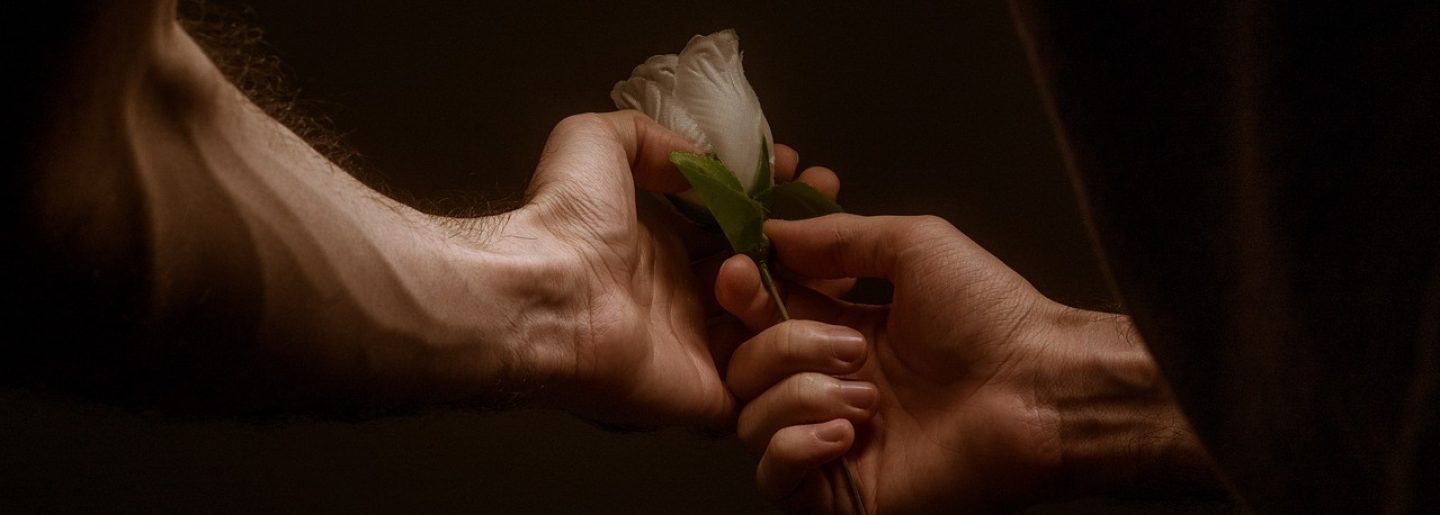


 What is Unmasked Haiku? Unmasked haiku, as I define it, strips away artificial nature tropes and decorative padding to expose direct human vulnerability turning the view from outside inside the human soul. It is a contemporary sub-genre focused on emotional truth, memory, and raw psychological reality, letting space, breath, and unvarnished language carry the quiet weight of the human experience.
 On the Universality of Haiku: Poetry knows no geographic borders. The claim that non-Japanese poets cannot write authentic haiku is absurd. Having curated fine-art anthologies featuring thousands of haiku from poets around the globe, I have seen firsthand how this form resonates across every culture. While haiku originated in Japan, its core power lies in capturing precise, felt moments of human existence—a capacity that belongs to all of humanity. True art transcends national boundaries, belonging to anyone willing to observe deeply and speak with honesty.


